Last updated: 15 October 2026
This post contains affiliate links. If you purchase through these links, I may earn a small commission at no extra cost to you. I only recommend products I've genuinely researched.
Update (15 Oct 2026): When we last checked, Amazon.com.au listed this product mentioned in this article as currently unavailable: VEVOR Ergonomic Kneeling Chair (heavy duty). The price shown is the last price we saw, so check the listing before you plan a purchase. We will update this article when it is back in stock.
Kneeling Chair vs Balance Ball Chair — here’s the short version before we dive into the full breakdown. Both are popular alternatives to the standard office chair — but kneeling chairs and balance ball chairs work very differently. Here’s an honest comparison to help you pick the right one for your home office in Australia.
If you’ve been exploring alternatives to a standard office chair, you’ve probably come across both kneeling chairs and exercise ball chairs. They’re both marketed as posture and core solutions, they’re both relatively affordable, and they both look unconventional. But they’re actually quite different in how they work and who they suit. Here’s the full breakdown.
Quick comparison
How each works
The kneeling chair
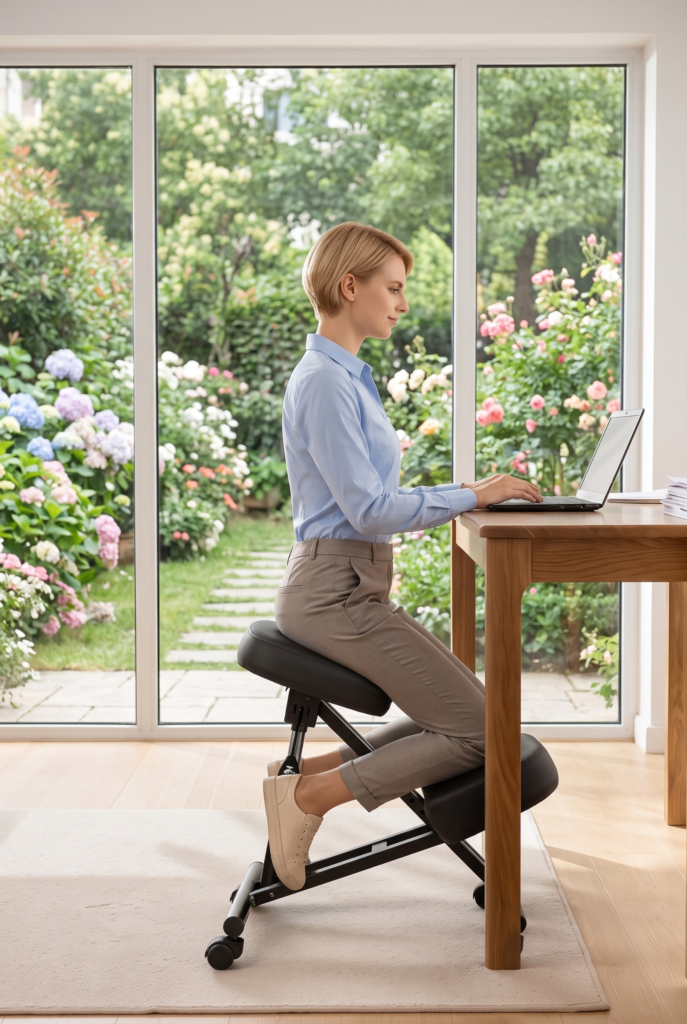
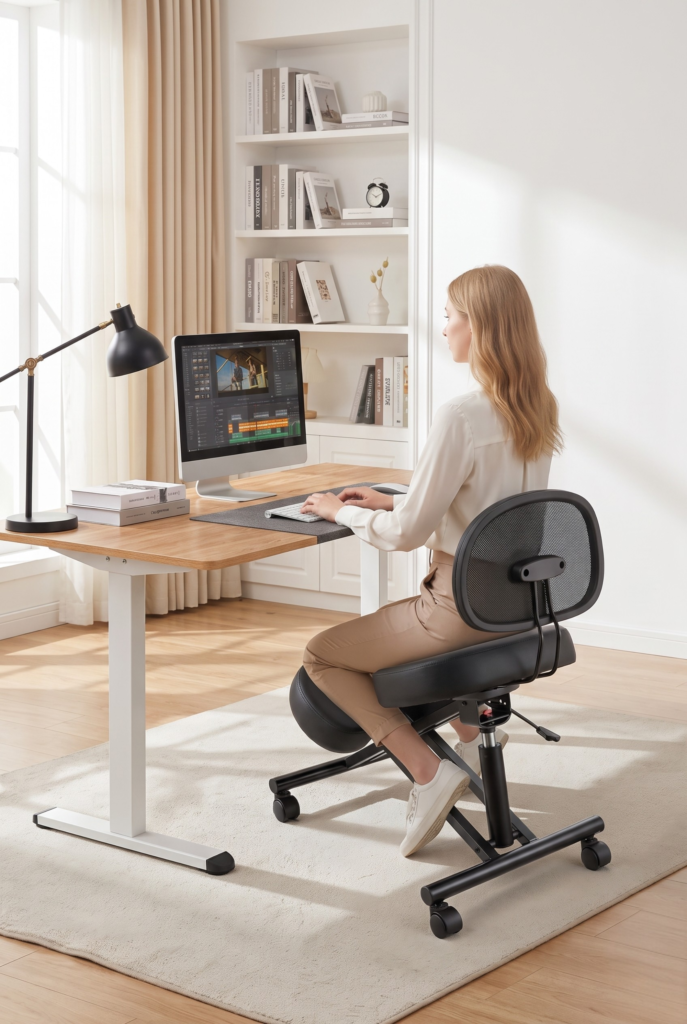
A kneeling chair uses a forward-tilted seat to open the hip angle and encourage a natural lumbar curve. You’re in a relatively stable position — the shin pads provide a fixed forward brace — and the posture benefit comes from the mechanical change in your hip and spine alignment. The result is reduced disc pressure in the lower back and a naturally upright seated position without conscious effort.
The balance ball chair
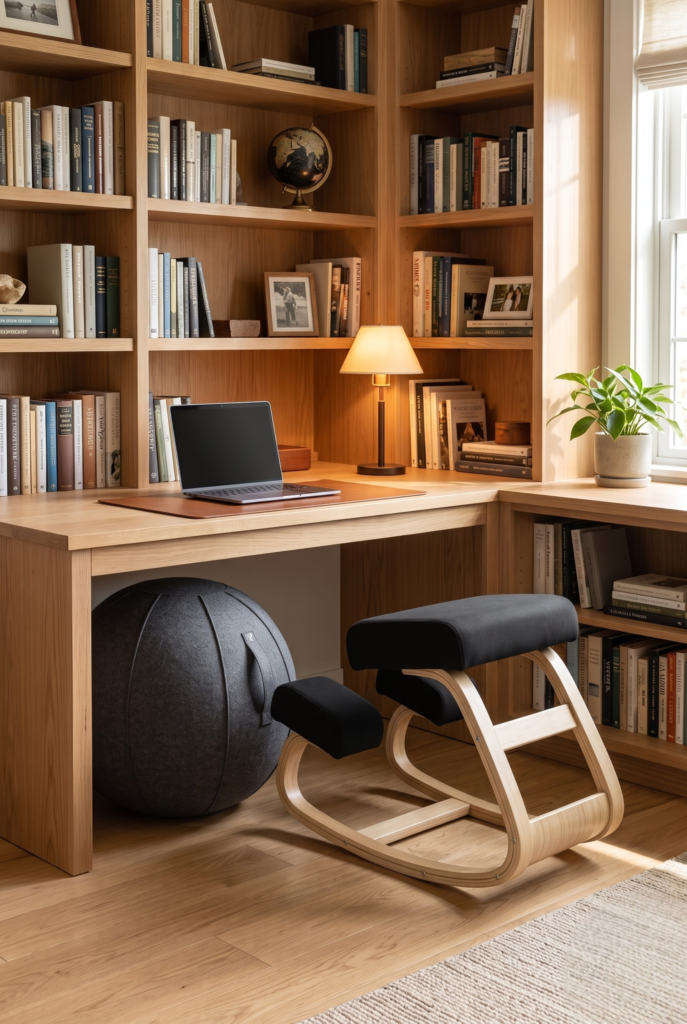
A balance ball chair keeps you at a similar 90-degree hip angle as a regular chair, but the unstable surface forces your core muscles to continuously make small adjustments to keep you balanced. The posture benefit, in theory, comes from this constant micro-movement and core activation. A quality balance ball chair like the Pantree adds an ergonomic backrest and lockable wheels, making it more practical for office use than a bare exercise ball on the floor.
What the research actually says
The research on balance balls as office chairs is more mixed than their popularity suggests. Several studies have found that sitting on an exercise ball does increase muscle activation in the core — but it also significantly increases lumbar compression and fatigue in the back muscles. For longer sessions, many studies found that exercise ball sitting caused more back discomfort, not less.
Kneeling chair research, while modest, is more consistently positive for lower back posture improvement. The mechanical hip angle change it creates is well-supported and doesn’t create the same compression issues as an unstable sitting surface.
💡 The honest take: Balance ball chairs are popular partly because they feel active and different. But “feeling like you’re working your core” isn’t the same as improving posture or reducing back pain. The kneeling chair has a clearer and better-supported mechanism for desk work — but a quality balance ball chair like the Pantree is a genuinely useful addition to a varied seating rotation.
Practical differences
- Stability for focused work: A kneeling chair stays put. A balance ball rolls when you shift weight, which can be distracting for tasks like writing or using a mouse. The Pantree addresses this with lockable wheels, but the ball surface itself still creates some movement. For focused desk work, kneeling chairs are more practical.
- Fatigue: Balance ball chairs are significantly more fatiguing for most people. Many users start enthusiastically and find they abandon them after a few weeks. Kneeling chairs have a gentler learning curve and are more sustainable for daily use.
- Versatility: The Pantree’s removable 55cm ball is a genuine advantage — it detaches for standalone use in yoga, Pilates, physiotherapy, or core training. Kneeling chairs stay as chairs. If you want one product that doubles as gym equipment, the Pantree wins on versatility.
- Weight capacity: The Pantree’s 300 kg capacity is exceptional — well above any kneeling chair in this price range. For heavier users who also want the ball chair experience, this is a meaningful advantage.
- Noise and disruption: A balance ball can roll, squeak, and occasionally needs re-inflation. A kneeling chair is silent and stable. In a shared home office or apartment, this matters.
Which is better?
For most Australian home office workers doing focused desk work, the kneeling chair is the better primary seat. It has a clearer posture benefit mechanism, is more practical for long work sessions, is more sustainable for daily use, and has stronger research backing for lower back improvement.
The Pantree Balance Ball Chair is a genuinely good product for what it does — and its 300 kg capacity, removable ball, and ergonomic backrest make it one of the better balance ball chairs available in Australia. It works best as part of a rotation: use the kneeling chair for focused work blocks, and switch to the balance ball for shorter sessions when you want core activation and movement variety.
Best kneeling chairs available in Australia
These are the top kneeling chairs currently on Amazon.com.au — all under $100:
Costway Kneeling Chair
$89.95 · High-Density Sponge Pads · 150kg Capacity
⚠️ Only 3 customer reviews on this listing so far — buy with caution.
JFHID Kneeling Chair
$89.99 · Steel Frame · No Backrest
⚠️ No customer reviews yet on Amazon.com.au — buy with caution.
Giantex Kneeling Chair
$99.95 · 150kg Capacity · Rocking Wood Frame
VEVOR Kneeling Chair
$99.99 · Height Adjustable · Linen Fabric
Best balance ball chair available in Australia
If you’ve decided a balance ball chair is right for you — or want to add one alongside your kneeling chair — here is the top option currently on Amazon.com.au:
Pantree Balance Ball Chair
$159.99 · 300kg Capacity · Removable 55cm Ball
Ergonomic Backrest · 4 Lockable Swivel Wheels · Air Pump Included
The Pantree is one of the most capable balance ball chairs available in Australia. The standout feature is its exceptional 300 kg weight capacity — far beyond any kneeling chair in this price range. The 55cm explosion-proof PVC ball detaches for standalone use in yoga, Pilates, or physiotherapy, making it genuinely versatile beyond desk use. The ergonomic backrest and 4 lockable swivel wheels make it more practical for office environments than a bare exercise ball, and the included air pump and exercise guide mean everything you need comes in the box.
At $159.99 it sits above the kneeling chairs in price — but if you want core activation, a very high weight capacity, and a chair that doubles as exercise equipment, it’s worth the premium.
Final verdict — which should you buy?
- Costwayfor the most affordable kneeling chair entry point — thick sponge pads and 150 kg capacity under $100.
- JFHIDif you want the cheapest steel-frame option and are comfortable buying an early listing with no reviews yet.
- Giantexif you’re over 100 kg and want the added movement of a rocking wood frame kneeling chair.
- VEVORif height adjustment is important — the most versatile kneeling chair for different users and desks.
- Pantreeif core activation and versatility are your priorities — or if you want a balance ball chair that also works as gym equipment. Best used alongside a kneeling chair rather than as a full replacement.
Related reading:
→ Are kneeling chairs worth it? Honest pros and cons
→ How to sit on a kneeling chair correctly
→ Best kneeling chairs for sciatica in Australia
→ Can a kneeling chair cause knee pain?