Kneeling chairs are often sold with big posture claims — but what does the research actually say? Here’s an honest look at the science, what they genuinely improve, and what they don’t fix.
Walk into any ergonomics conversation and you’ll hear kneeling chairs praised as the solution to bad posture. But do they actually work? And if so, how, and for whom? We’ve dug into both the research and real-world user experience to give you a clear, honest answer — without the marketing fluff.
What kneeling chairs are designed to do
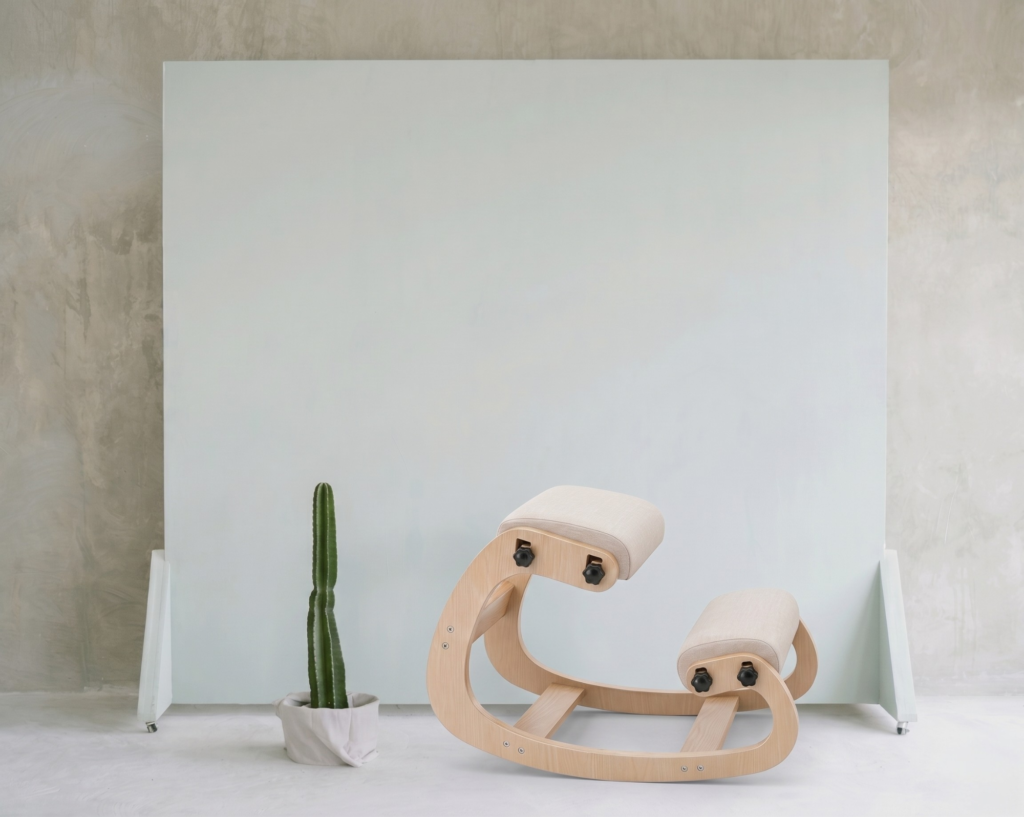
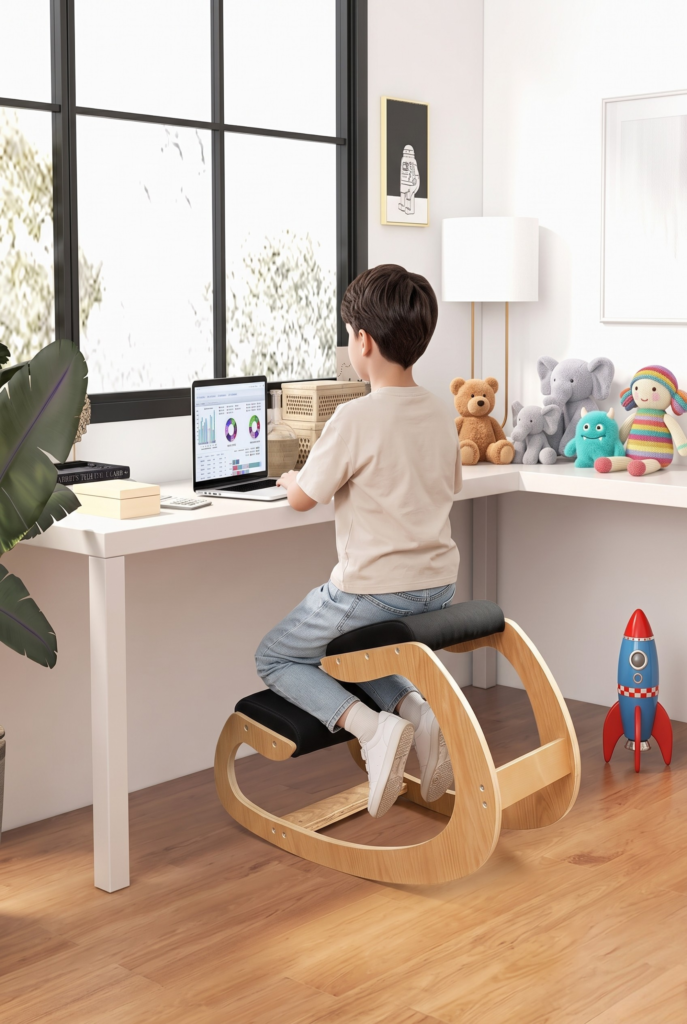
A kneeling chair works by tilting the seat forward at around 20–30 degrees, which shifts the hip angle from 90 degrees (standard chair) to around 110–120 degrees. This wider hip angle has a direct mechanical effect on the spine:
When your hips open up, the lumbar spine (lower back) curves more naturally inward into its neutral lordotic curve — the gentle S-shape that healthy spines are supposed to maintain. In a standard 90-degree sitting position, many people lose this curve and the lumbar flattens or reverses, putting pressure on spinal discs and straining the surrounding muscles.
So in theory: open hip angle → natural lumbar curve → better spinal alignment. Does this actually hold up?
What the research says
The research on kneeling chairs is modest in volume but broadly consistent. Studies going back to the 1980s and more recent ergonomics research have found that kneeling chairs do measurably increase lumbar lordosis compared to standard chairs — meaning the lower back does adopt a more natural curve.
A commonly cited finding is that kneeling chairs produce a lumbar angle closer to a standing neutral posture than conventional seats. This supports the core claim that they help restore a healthier spinal position.
However, the research also consistently notes:
- The benefit depends heavily on duration — muscle fatigue sets in and posture degrades over longer sessions
- Kneeling chairs increase muscle activity in the lower back compared to supported chairs — which is both the benefit (strengthening) and the drawback (fatigue)
- They don’t eliminate poor posture — they make good posture the path of least resistance, but users can still slouch
- There are individual differences — people with certain proportions or conditions may benefit more or less
What kneeling chairs actually improve
- Lower back posture: This is the strongest evidence. Kneeling chairs reliably improve lumbar curve position compared to standard chairs during active use.
- Hip flexor position: The open hip angle reduces the chronic shortening of hip flexors that happens in standard prolonged sitting. Over time this can reduce hip tightness and lower back pain.
- Core muscle engagement: Because there’s no backrest, your core and back muscles do more work. Over weeks and months, regular kneeling chair use can improve baseline core strength and endurance.
- Awareness of posture: Many users report that regular kneeling chair use makes them more conscious of their posture — including when they’re not in the chair. This habit transfer is a real and underrated benefit.
What kneeling chairs don’t fix
- Upper back and neck posture: Kneeling chairs primarily address the lumbar region. They don’t directly correct forward head posture or upper back rounding — those require additional interventions like monitor height adjustment and targeted stretching.
- Long-duration sitting health risks: The research on sedentary behaviour is clear: prolonged sitting is problematic regardless of what you sit on. A kneeling chair in a better position is still sitting. Standing breaks, movement, and exercise remain important.
- Pre-existing structural problems: If you have a herniated disc, scoliosis, or other structural spinal issues, a kneeling chair may help or may aggravate things — depending on the specifics. Consult a physio if you have a diagnosed condition.
How long does it take to see improvement?
| Timeframe | What You Can Expect |
|---|---|
| Week 1–2 | Adjustment period — some muscle soreness is normal |
| Week 2–4 | Reduced lower back tension during and after sitting |
| Month 1–2 | Noticeable improvement in natural sitting posture |
| Month 2–3+ | Improved core endurance, better postural habits overall |
The verdict
Yes — kneeling chairs genuinely improve posture, specifically in the lumbar region, and the mechanism is well understood. They’re not magic and they won’t undo the damage of decades of bad sitting overnight. But used consistently, in rotation with regular breaks and movement, they are a legitimate posture tool that delivers real results for most users.
For Australians looking for an affordable, practical posture improvement tool, they represent excellent value — quality options are available on Amazon.com.au for under $110. For the full breakdown of how to use one correctly to get the most out of it, see our guide on how to sit on a kneeling chair correctly.
Best kneeling chairs for posture improvement — Australia
These are the best options currently available on Amazon.com.au:
💡 Which should you buy?
Go Artiss for comfortable posture training sessions — memory foam cushioning lets you build up session length more comfortably, and the local AU brand means easy returns.
Go Giantex if you want the rocking base to add extra core engagement to each session — the constant micro-movement amplifies the posture and strengthening benefits.
Go Costway if you want to try kneeling chair posture benefits at the lowest price — under $90 with thick sponge pads and solid rocking plywood frame.
Go VEVOR to dial in the best height for your body and maximise spinal alignment — the widest adjustment range of the four makes it the most precise fit.