Last updated: 15 October 2026
Update (15 Oct 2026): When we last checked, Amazon.com.au listed these products mentioned in this article as currently unavailable: VEVOR Ergonomic Kneeling Chair (heavy duty) and Luxsuite Ergonomic Kneeling Chair. The prices shown for them are the last prices we saw, so check the listing before you plan a purchase. We will update this article when they are back in stock.
A side-by-side look at the real benefits and real drawbacks — for Australians dealing with back pain, bad posture, or just too many hours at a desk.
Kneeling chairs have been around since the late 1970s, and every few years they have a moment where everyone suddenly wants one. Right now, that moment is happening again — driven largely by people working from home and realising their kitchen chair or hand-me-down office seat is quietly destroying their back.
But are kneeling chairs actually worth it? Or are they just another ergonomic gadget that sounds great in theory and ends up gathering dust in the corner? I’ve tested several models and spent a lot of time with the research. Here’s the honest answer — including who should buy one, who shouldn’t, and which chairs are worth considering if you’re in Australia.
What is a kneeling chair, exactly?
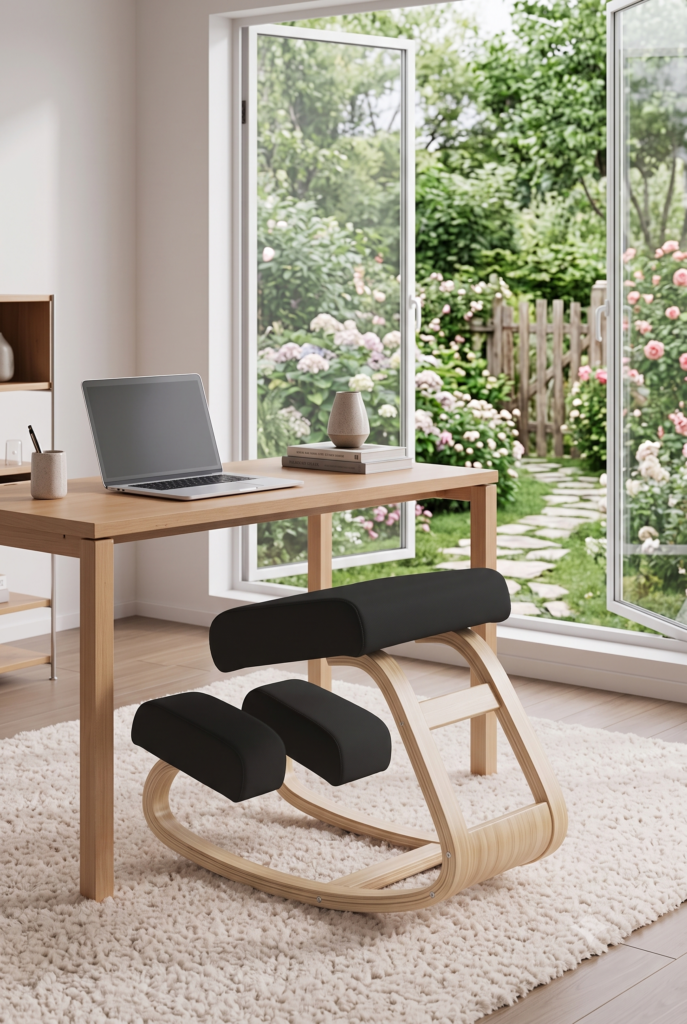
Before we get into pros and cons, it helps to understand what a kneeling chair actually does — because the name is a little misleading. You’re not really kneeling on it. Your buttocks still carry around 80% of your weight. The knee pads (or shin pads) are there to stop you sliding forward off the angled seat — not to bear your full load. Think of it less like kneeling on the floor and more like sitting on a forward-tilted saddle.
That forward tilt is the whole point. A standard office chair puts your hips and thighs at a 90° angle, which flattens your natural lumbar curve and puts pressure on your spinal discs. A kneeling chair opens that angle to around 110–120°, which helps your spine return to its natural S-shape without you having to consciously think about it.
💡 Quick anatomy note: Research suggests that a 110° back-thigh angle can reduce disc pressure in the lumbar spine by up to 65% compared to the traditional 90° seated position. That’s a meaningful difference for people with lower back issues.
The honest pros of kneeling chairs
1. They genuinely improve posture
This is the main reason people buy them, and it’s backed up by real experience. The forward-tilted seat naturally aligns your spine, shoulders, and neck without requiring willpower or reminders. Most users notice they’re sitting straighter within the first few days — not because they’re trying to, but because the chair’s geometry makes slouching harder.
2. They reduce lower back pain for many people
By opening the hip angle and reducing compression on the lumbar discs, kneeling chairs take a meaningful amount of pressure off the lower back. This is especially noticeable for people who sit for four or more hours a day and experience tension or pain in the lower back by mid-afternoon.
3. They engage your core muscles
Without a backrest (most kneeling chairs don’t have one), your core and back muscles do more work to keep you upright. Over weeks and months of regular use, this gradually strengthens the muscles that support your spine — which helps even when you’re sitting in a regular chair.
4. They improve breathing and digestion
When your hips are open at 110–120°, your abdominal organs have more room. Your diaphragm can expand more freely, which means deeper, easier breathing. Your digestive system also experiences less compression — which can help if you notice bloating or discomfort after long sitting sessions.
5. Rocking models keep you actively moving
The best kneeling chairs have a sled or curved base that allows a gentle rocking motion as you work. Constant micro-movement keeps your blood circulating, your muscles engaged, and your focus sharper than sitting perfectly still ever could.
6. They’re compact and easy to store
Most kneeling chairs are significantly smaller than a standard office chair. They tuck under desks easily, some fold flat for storage, and they’re much lighter to move around. For Sydney apartments and smaller home offices, this is a genuine practical advantage.
The honest cons of kneeling chairs
1. Shin and knee discomfort in the early weeks
This is the most common complaint, and it’s real. Your shins aren’t used to bearing any weight at all, so the first one to three weeks can involve some soreness. The good news is that this passes for most people as their body adapts. Starting with short sessions — 20 to 30 minutes — and alternating with a regular chair makes a big difference.
2. Not designed for full-day use
Kneeling chairs work best as part of a rotation, not as your sole seat. Most ergonomic experts and manufacturers themselves recommend alternating between your kneeling chair and a regular chair throughout the day. If you’re planning to sit in one for eight hours straight, you’ll likely end up uncomfortable regardless of the chair’s quality.
3. Getting in and out can be awkward
The low profile and angled seat make kneeling chairs trickier to get into and out of compared to a standard chair — especially if you’re in a small space or working around a large desk. This isn’t a dealbreaker, but it’s worth knowing if you get up frequently during your workday.
4. Leg movement is restricted
You can’t cross your legs, stretch your legs out, or shift position as freely as you can in a regular chair. Most of the movement available to you is in the upper body. Models with a rocking base partly address this, but it’s still a more constrained sitting experience overall.
5. Budget models have real quality issues
At the entry-level price point, foam padding can compress and bottom out after a few weeks, cheap vinyl causes heat buildup, and short warranties leave you exposed if something goes wrong. Choosing a chair with decent cushioning and at least a one-year warranty makes a significant difference to the long-term experience.
6. Not for everyone physically
People with existing knee injuries should approach kneeling chairs with caution. People over 6’2″ may also find that most budget models don’t fit their frame properly.
So — are they worth it?
Yes, for the right person and the right use case. If you work at a desk for three or more hours a day, experience lower back tension or poor posture, and are willing to use a kneeling chair as part of a rotation rather than your only seat — it’s very likely to help you. Most people who commit to the adjustment period report genuine, lasting improvement in both posture and back comfort.
If you’re looking for a single chair to sit in all day without thinking about it, a kneeling chair probably isn’t the right fit. A well-adjusted ergonomic office chair or a height-adjustable desk setup might serve you better.
Which kneeling chairs are worth buying in Australia?
If you’ve decided a kneeling chair is worth trying, here are the wood-frame and steel-frame options we recommend for Australian buyers — all available on Amazon.com.au and verified against each chair’s own review page.
Luxsuite Kneeling Chair
Birch & Poplar Rocking Base · ~$109.95 AUD · 4.5★ (6 reviews)
Our top pick for most Australian buyers. A high average rating, though from only a handful of reviews, with a confirmed genuine rocking base and 125kg capacity. Reviewers specifically credit it with hip pain relief and comfort at larger body weights.
⚠️ Only 6 reviews so far — a strong average, but a thin sample. Read them before buying.
Giantex Kneeling Chair
150kg Capacity · ~$99.95 AUD · Rocking Bentwood Frame
The Giantex stands out for its 150kg weight capacity — the highest of the group — and its solid wood frame that feels genuinely sturdy out of the box. If frame sturdiness and durability are your top priorities, this is the one to go for. The rocking base has a smooth, satisfying motion that keeps you naturally shifting position throughout the day.
Costway Kneeling Chair
High-Density Sponge Pads · ~$99.95 AUD · 150kg Capacity
The Costway is the most affordable of the group at under $100 — making it the lowest-risk way to try kneeling chair sitting. Despite the lower price, it matches the Giantex on weight capacity at 150kg, and the high-density sponge pads on both the seat and knee cushions hold up better than the cheap foam found on generic no-name models.
⚠️ No customer reviews yet on this listing — buy with caution.
VEVOR Kneeling Chair
Height Adjustable · ~$99.99 AUD · Linen Fabric
The VEVOR is the only wood-frame chair here with adjustable height — a key feature if you’re sharing the chair with a partner or switching between desks. Its linen fabric cover is naturally more breathable and ages better than polyester or vinyl, and the firmness sits comfortably between the other budget options.
Prefer a steel frame? Two well-reviewed options
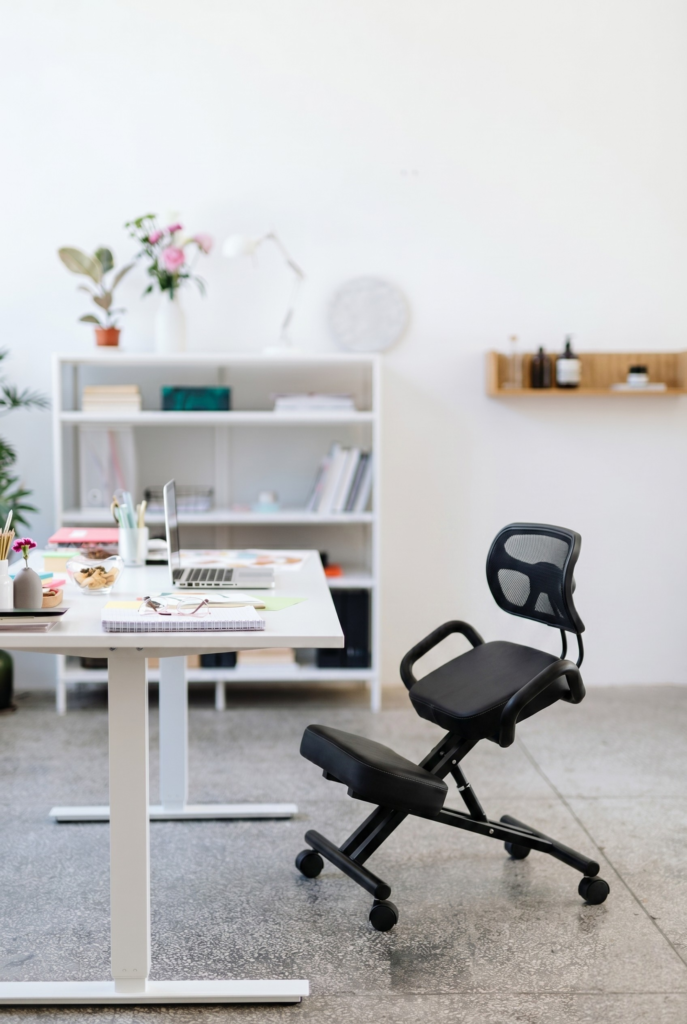
If you want wheels for mobility, or a backrest for longer sessions, these two are confirmed via their own review pages with real reviews behind them.
Levede Kneeling Chair
Steel Frame · ~$85.80 AUD · Amazon’s Choice
Levede Kneeling Chair (Backrest)
Steel Frame · ~$104.00 AUD · Backrest & Wheels
💡 Which one should you buy?
- Luxsuiteif you want a highly-rated wood chair in our whole comparison and don’t mind a small review sample.
- Giantexif you’re over 120kg or want the sturdiest frame — the 150kg bentwood rocking frame is the most durable option in this price range.
- Costwayif you want to try a kneeling chair at the lowest possible cost — though currently unreviewed on Amazon AU.
- VEVORif you want height adjustment, you’re sharing the chair, or you plan to use it at different desks.
- Levedeif you want the cheapest well-reviewed chair on the site, with wheels for mobility.
- Levede (Backrest)if you want back support for longer sessions without going over $110.
Related reading:
→ How to sit on a kneeling chair correctly
→ How long should you actually sit in a kneeling chair each day?
→ Best kneeling chairs for sciatica in Australia
→ Kneeling chair cushion replacement guide — Australia
→ Luxsuite kneeling chair review — worth it in Australia?
→ Giantex kneeling chair review — worth buying in 2026?
→ Costway kneeling chair review — worth buying in 2026?
→ VEVOR kneeling chair review — worth it in Australia?
→ Levede kneeling chair review — worth it in Australia?
→ Levede kneeling chair (backrest) review — worth it in Australia?
This post contains affiliate links. If you purchase through these links, I may earn a small commission at no extra cost to you. I only recommend products I’ve genuinely researched.